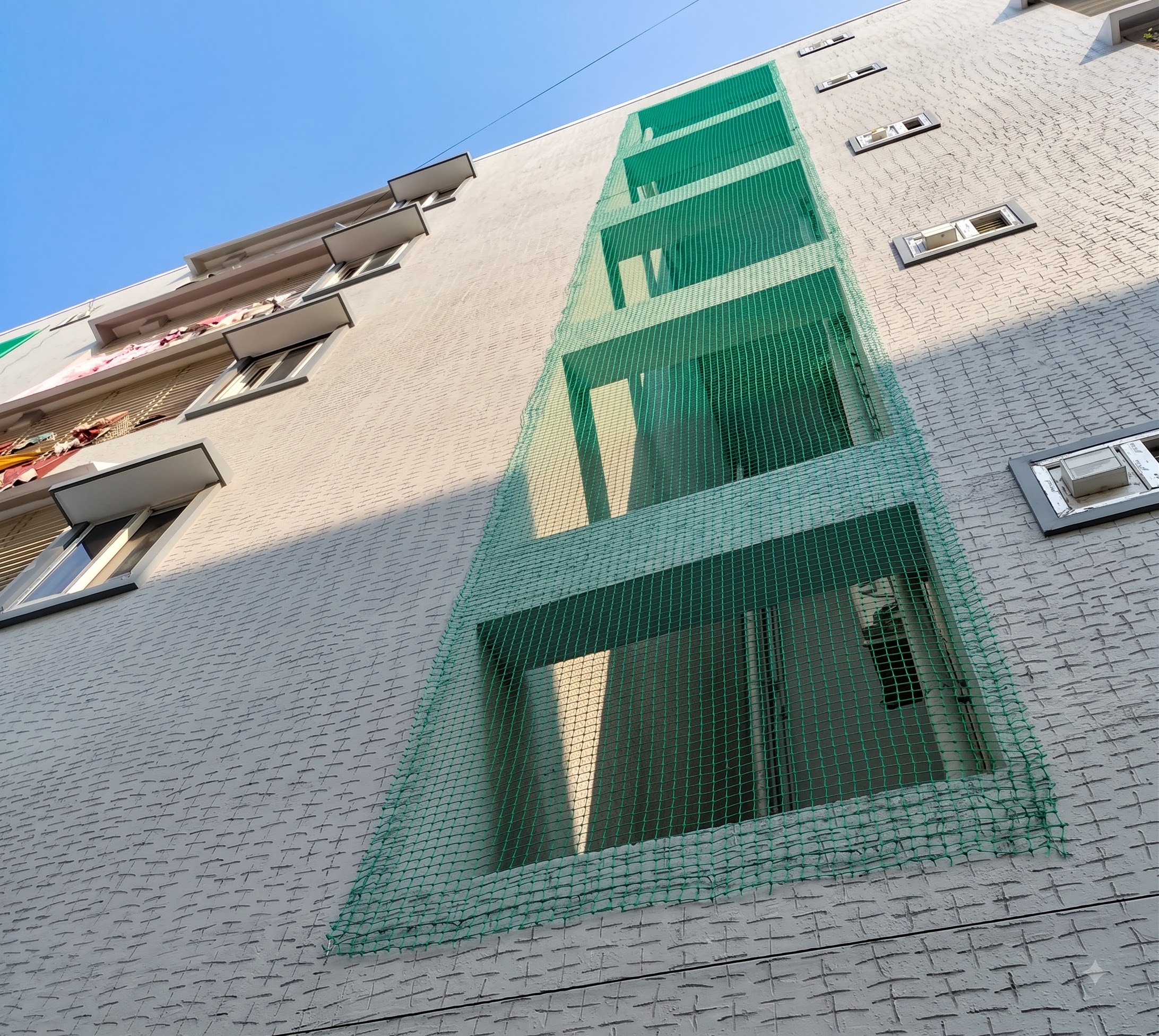
In Chennai's multi-story residential communities—from Anna Nagar to Velachery and OMR—building utility duct shafts serve as an unintended haven for urban blue rock pigeons. Left unprotected, these vertical shafts turn into biohazard corridors that damage plumbing, choke AC drain lines, and seep severe respiratory pathogens directly into your home.
- 1. What Exactly is an Apartment Duct Area?
- 2. Why Pigeons Are Drawn to Ventilation Shafts
- 3. The 4 Hidden Dangers of Unprotected Shafts
- 4. How Duct Area Safety Nets Solve the Menace Permanently
- 5. Selecting the Right Net Material for Chennai Coastal Climate
- 6. The "Service Hatch" Rule for AC & Plumbers
- 7. Frequently Asked Questions
1. What Exactly is an Apartment Duct Area?
Modern architectural design in residential apartment towers across Chennai incorporates vertical open voids known as duct areas, utility shafts, or lightwells. These vertical chambers run from the ground or parking floor all the way to the building terrace.
Their primary purpose is essential: they route wastewater plumbing lines, soil pipes, kitchen and bathroom exhaust vents, electrical conduits, and copper piping for split air conditioners. They also channel fresh air and natural daylight into interior rooms that lack external facade exposure.
2. Why Pigeons Are Drawn to Ventilation Shafts
Pigeons (*Columba livia*) are cliff-dwelling birds by nature. In a densely developed urban landscape like Chennai, a multi-story duct shaft perfectly replicates natural canyon walls:
- Protection from Predators: Birds of prey like hawks and eagles cannot maneuver within narrow shaft cavities.
- Shielded from Weather: The shaft protects them from Chennai's scorching summer heatwaves, torrential monsoon rains, and strong sea gusts.
- Abundant Perching Ledges: Protruding PVC pipes, horizontal clamp brackets, and external AC compressor brackets offer ideal nesting shelves.
3. The 4 Hidden Dangers of Unprotected Shafts
When hundreds of pigeons make your apartment shaft their permanent breeding colony, serious consequences follow:
A. Airborne Dust & Hygiene Concerns
Accumulated pigeon droppings and nesting debris dry out over time in warm weather, crumbling into fine airborne dust. When bathroom ventilation louvers or kitchen windows open into an untreated duct shaft, loose debris and unpleasant odors can drift into living spaces, creating persistent hygiene concerns for residents.
B. Choked Drainage & Water Ingress
Pigeons shed thousands of feathers and nesting debris made of twigs, plastic shreds, and dried carcasses. During heavy monsoons, this detritus washes into rainwater drainage traps at the bottom of the duct shaft, creating massive waterlogging and seepage into ground-floor residences.
C. Acidic Corrosion of AC & Plumbing Lines
Pigeon droppings contain acidic compounds that, over time, can accelerate cosmetic and structural wear on outdoor AC condenser fins, soil PVC drain joints, and corrode exposed metal brackets on shaft ledges.
D. Overwhelming Foul Ammonia Odour
The accumulation of decomposing droppings inside poorly ventilated vertical shafts creates an unbearable stench that penetrates through exhaust vents into modern bathrooms and modular kitchens.
A single pair of urban pigeons can produce up to 12 offspring every year. In a 5-story apartment shaft, an untreated pigeon pair can multiply into a colony of over 50 birds within 18 months!
4. How Duct Area Safety Nets Help Restrict Bird Access
Bird droppings and nesting materials can accumulate in open building ducts and make cleaning difficult. A suitably selected and installed net helps restrict bird access by creating a durable physical barrier across shaft openings without causing harm to birds or impeding required building ventilation.
| Feature | Traditional Spikes / Ultrasonic | Poorna Duct Area Safety Nets |
|---|---|---|
| Effectiveness | Partial (Birds shift to adjacent pipes) | Complete physical barrier against bird entry |
| Coverage | Single ledges only | Entire vertical & horizontal shaft aperture |
| Light & Air Flow | No impact | Maintains natural airflow through open mesh pattern |
| Longevity | 1-2 Years before falling off | 5 to 8+ Years with UV Garware Material |
| Maintenance | Requires frequent cleaning | Low maintenance; periodic visual check recommended |
5. Selecting the Right Net Material for Chennai Coastal Climate
Chennai's humid, salt-laden coastal atmosphere causes cheap unbranded netting and mild steel hardware to brittle and rust within months. At Poorna Enterprises, we insist on:
- Garware UV-Stabilized Co-Polymer Nylon: Resistant to intense ultraviolet degradation, high tensile strength to withstand environmental wind pressure, and an unobtrusive appearance from ground level.
- High-Density Polyethylene (HDPE): Non-absorbent synthetic polymer resistant to outdoor humidity, rain, and industrial emissions; suitable for commercial duct shafts.
- Grade 316 Stainless Steel Rigging: Turnbuckles, perimeter wire ropes, and expansion anchor bolts engineered never to corrode in Chennai's saline coastal air.
6. The "Service Hatch" Rule for AC & Plumbers
One major mistake inexperienced vendors make is sealing the duct completely without access points. When an apartment's AC compressor requires gas refilling or a plumbing pipe develops a leak, workers are forced to cut through the net.
The Poorna Difference: We incorporate heavy-duty industrial zipper panels or Velcro service hatches at designated maintenance tiers. This allows authorized technicians easy access for pipe maintenance while guaranteeing zero pigeon entry once zipped closed.