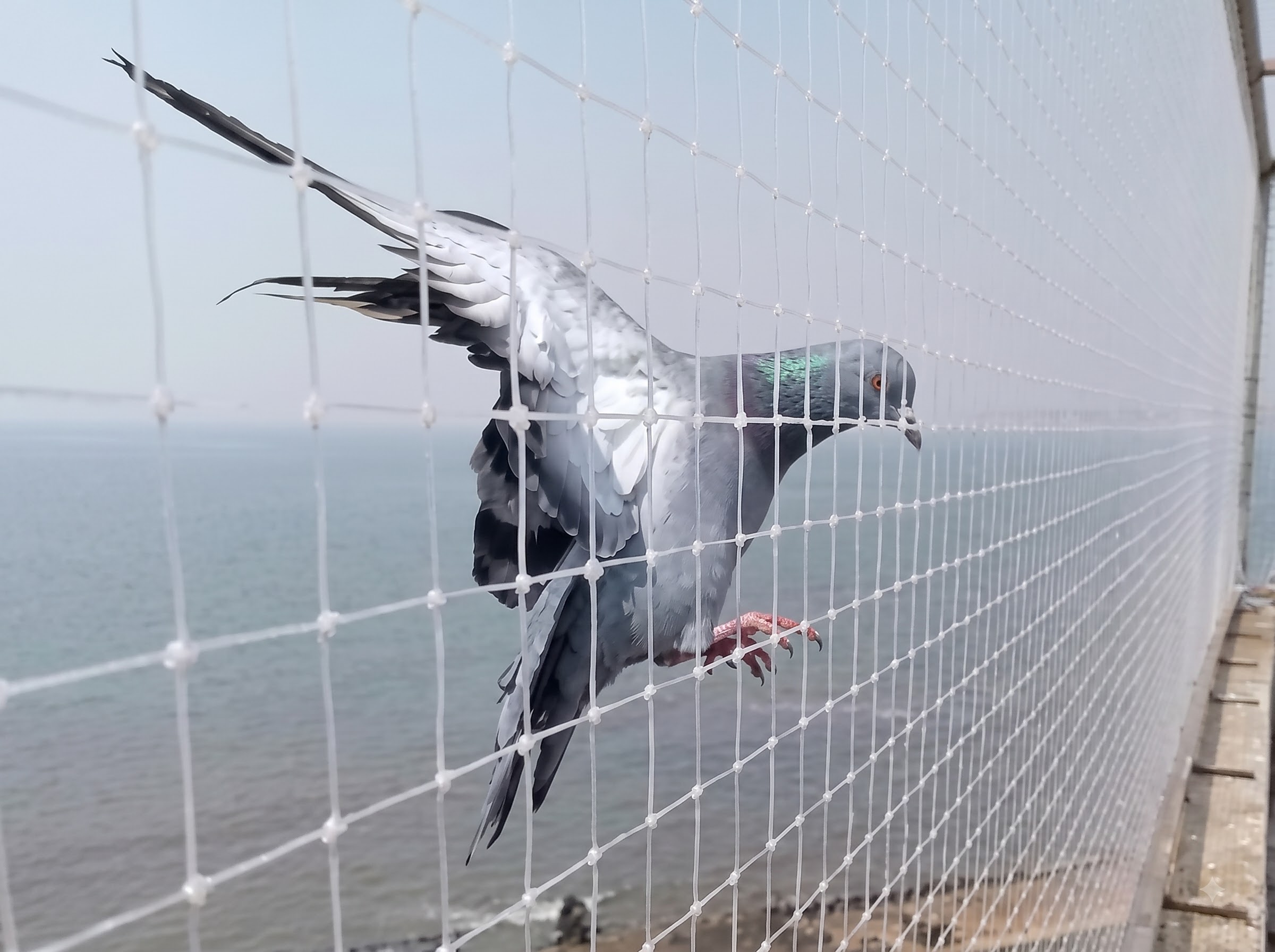
For Chennai residential apartments, Garware UV-Stabilized Nylon Netting is the clear winner. It offers high tensile strength, discreet visual profile, and superior flexibility in high-tension vertical shaft rigging compared to rigid HDPE.
1. The Unique Challenge of Chennai's Climate
Chennai’s geographic location along the Coromandel Coast subjects outdoor building materials to intense atmospheric stress:
- High UV Index: Direct solar radiation reaching UV indices of 10+ for 9 months of the year, accelerating plastic photo-degradation.
- High Relative Humidity & Saline Breeze: Airborne chloride ions from the Bay of Bengal oxidize metals and degrade low-quality polymer chains.
- Monsoon Deluges & Cyclonic Gusts: Northeast monsoons bring intense downpours and wind gusts exceeding 80–120 km/h.
Using ordinary cheap plastic mesh in an apartment duct shaft leads to sagging, brittleness, and tears within 12 months. That is why choosing the right polymer material is critical.
2. Garware High-Tenacity Nylon: Properties & Advantages
Garware Technical Fibres is India’s foremost manufacturer of engineered netting. Their co-polymer nylon nets feature:
- Multifilament Weave: Twisted multi-strand fibers distribute mechanical load evenly.
- High Tensile Strength: Engineered multifilament strands distribute load evenly to resist mechanical strain and environmental wind pressure without snapping.
- UV Stabilizer Masterbatch: Polymer compounds injected with carbon black or optical hindered amine light stabilizers (HALS), preventing brittleness under continuous sunlight.
- Optical Elegance: Translucent finish makes the netting visually discreet from the ground, ensuring building elevation aesthetics remain intact.
3. UV-Stabilized HDPE: Properties & Best Use Cases
High-Density Polyethylene (HDPE) netting is constructed from monofilament extruded plastics. It has distinct characteristics:
- Moisture Resistance: HDPE monofilament does not absorb standing water, making it quick to shed heavy rain.
- Chemical & Acid Resistance: Highly resistant to chemical fumes, industrial emissions, and acid pigeon droppings.
- Slightly Stiff Rigidity: HDPE fibers are stiffer than nylon, which can make edge stretching across complex irregular duct corners slightly more labor-intensive.
4. Head-to-Head Comparison: Nylon vs HDPE
| Evaluation Parameter | Garware Nylon (Poorna Choice) | Standard HDPE Netting |
|---|---|---|
| Tensile Breaking Load | Very High (45 - 55 kg) | Moderate (20 - 30 kg) |
| UV Weathering Resistance | Exceptional (5 to 8+ Years) | Good (3 to 5 Years) |
| Aesthetic Invisibility | Translucent finish / Low visual impact | More visible (Thicker opaque filament) |
| Flexibility in Deep Shafts | High (Tight, drum-like tensioning) | Moderate (Prone to creasing) |
| Warranty Period | Up to 5 Years (material UV warranty) | Up to 3 Years (material UV warranty) |
5. Choosing the Optimal Mesh Size (25mm vs 40mm)
For building duct shafts, selecting the correct aperture size is just as crucial as the material:
- 25mm Mesh (1 Inch): Recommended for comprehensive bird proofing. Keeps out adult pigeons, small feral pigeons, mynas, and crows while maintaining maximum airflow.
- 40mm - 50mm Mesh (1.5 to 2 Inch): Primarily used for monkey protection or sports netting. Pigeons can occasionally squeeze through or trap their heads in larger apertures.
6. Final Recommendation by Poorna Enterprises
For most residential apartment associations in Chennai, Garware 1.0mm or 1.2mm UV-treated Nylon Netting with 25mm mesh delivers a reliable balance of durability, airflow, aesthetics, and overall value.